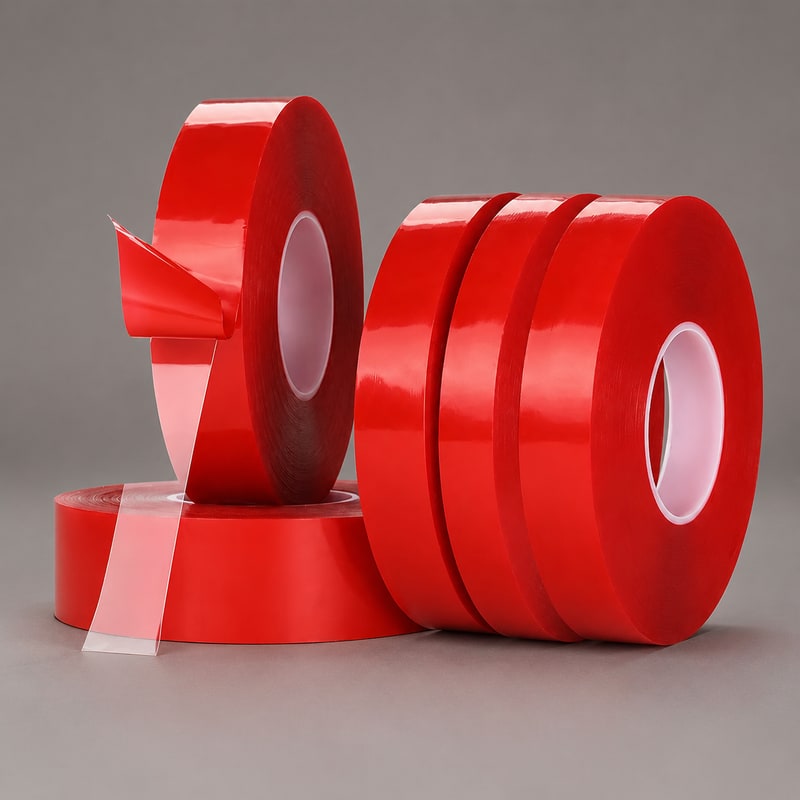
For decades, manufacturers have relied on screws, rivets, welds, clips, and liquid adhesives to join parts together. Those methods still matter, but a quieter technology is changing the way products are designed and built: engineered adhesive tape.
Unlike a mechanical fastener, tape can disappear inside the product. It can create a clean exterior, distribute stress across a broad area, protect delicate substrates, and arrive already cut to the exact geometry required by an assembly line. This is why adhesive tape is no longer treated as a simple consumable. In modern manufacturing, it is increasingly a design material.
The important shift is not from “fasteners” to “tape.” It is from joining parts after the design is complete to designing the joint as part of the product from the beginning.
Why invisible bonding matters
Visible fasteners communicate function, but they also bring compromises. A screw needs a hole. A rivet can concentrate stress. A weld may distort heat-sensitive materials. Liquid adhesive can add mess, cure time, and variability. Each of those factors affects appearance, line speed, material choice, and long-term reliability.
Pressure-sensitive adhesive tapes solve a different version of the same problem. They create a bond through a thin engineered layer that conforms to the surface and spreads load over the full bond area. The result is often a cleaner and lighter assembly with fewer secondary operations.
That matters when manufacturers are trying to achieve all of the following at once:
- A flush, premium-looking surface with no visible hardware
- Faster assembly with less drilling, fixturing, and cleanup
- Reduced vibration, noise, and rattling
- Protection for painted, coated, polished, or thin materials
- Reliable bonding between unlike substrates
- A process that can be automated at scale
A tape joint is an engineered system
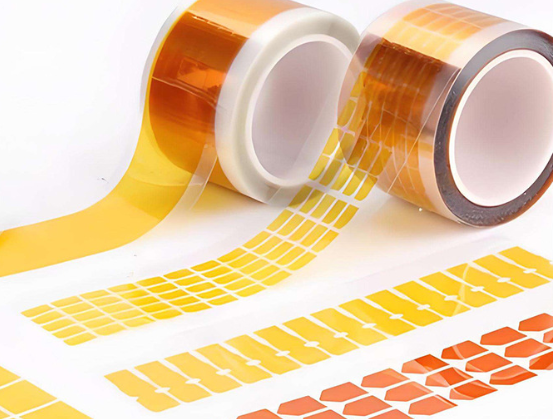
The word “tape” can be misleading. Industrial bonding tape is not defined by its roll format. It is a construction made from a backing or carrier, one or more adhesive layers, a liner, and sometimes reinforcement, foam, foil, film, or conductive elements. Each layer has a job.
A PET carrier can provide dimensional stability. An acrylic foam can compensate for uneven surfaces and absorb movement. A polyimide film can withstand demanding thermal and electrical environments. A conductive foil can create an EMI path while securing a component. The liner protects the adhesive and can be selected for manual placement, automated dispensing, or die-cut handling.
The best tape is therefore not simply the one with the highest initial peel value. It is the one whose construction matches the assembly and the service environment.
| Design question | Why it changes the tape choice |
|---|---|
| What are the two substrates? | Surface energy, texture, coating, and stiffness affect wet-out and adhesion. |
| What loads will the joint see? | Peel, shear, tensile, compression, impact, and vibration place different demands on the bond. |
| What is the operating environment? | Heat, cold, humidity, UV, chemicals, and cleaning agents can change adhesive behavior over time. |
| How will the tape be applied? | Manual placement, roll-fed automation, and die-cut pick-and-place require different liners and formats. |
| Does the joint need to be permanent? | Some assemblies need durable bonding; others need clean removal, masking, or temporary fixation. |
Replacing hardware without creating hidden risk
When a screw is replaced with tape, the design does not become less technical. The engineering moves into the interface.
For example, a mechanical fastener usually carries load at a few concentrated points. A tape bond performs best when the joint is designed to use surface area efficiently and to favor shear over peel. A broad overlap, properly cleaned surface, controlled application pressure, and adequate dwell time can make a major difference to durability.
This is also where tape can improve the product beyond simple attachment. Foam tapes can damp vibration between panels. Thin film tapes can bond trim without telegraphing through the visible surface. Electrical insulation tapes can separate sensitive components while keeping an assembly compact. In these cases, one converted part can combine bonding, protection, spacing, and noise reduction.
The manufacturing advantage: fewer steps, tighter repeatability
Adhesive tape is particularly valuable when it is converted before it reaches the production line. Instead of cutting material at the workstation, a manufacturer can receive a roll, sheet, kiss-cut part, or individually separated component matched to its drawing.
That changes the workflow. Operators do not need to measure and trim material. Automated equipment can place parts from a stable liner. Quality teams can inspect a consistent converted geometry instead of relying on hand-cut variation. Scrap and handling time often fall as a result.
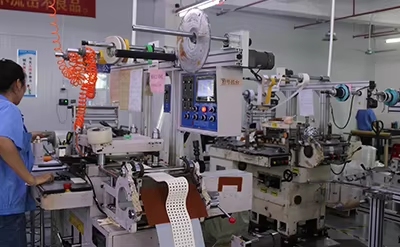
Common converting options include:
- Slitting and rewinding for a specific roll width, length, core, and unwind direction
- Die-cutting for repeatable pads, rings, gaskets, tabs, and complex profiles
- Lamination to combine adhesive with foam, film, foil, fabric, or other functional materials
- Kiss-cutting to keep parts organized on a liner for faster placement
- Spooling and custom packaging for longer continuous runs and automated assembly
The practical question for a production engineer is not only “Can this tape bond the parts?” It is also “Can this material be delivered in a format that removes friction from our line?”
Where invisible bonding is changing product design
Electronics and electrical assemblies
Compact electronics leave little room for brackets or bulky fastening systems. Tape is used to fix components, insulate battery areas, secure displays, manage EMI, and protect delicate surfaces during processing. Polyimide, PET, conductive foil, and double-sided film tapes all serve distinct roles in these assemblies.
Automotive and transportation
Manufacturers use tape to attach trims, emblems, sensors, interior components, wire harness elements, and acoustic materials. The value is not only appearance. Properly selected tapes help manage vibration, movement between materials, temperature cycling, and fast assembly requirements.
Appliances, displays, and consumer products
Clean surfaces are part of the product promise. Adhesive tapes make it possible to mount nameplates, decorative panels, lenses, seals, and functional components without visible hardware. They can also protect painted or polished surfaces that would be damaged by drilling or welding.
Industrial equipment and fabricated assemblies
In industrial settings, tape can secure labels, insulation, gaskets, cable-management components, and protective materials. Where a bonded joint needs to handle heat or chemicals, the tape construction must be tested against the actual production environment rather than selected from a general-purpose description.
A disciplined path to tape selection
Successful tape projects begin with application details. Before choosing a material, define the substrates, surface condition, bond geometry, load direction, expected temperature range, chemicals, aging period, and line process. A small change in coating, texture, or application pressure can change the result.
Then validate with the actual parts. A sensible qualification should check initial adhesion, bond build, shear holding power, peel resistance, edge lift, residue, appearance, and any required electrical or thermal performance. Test after the same heat, humidity, vibration, and cleaning exposure the final product will experience.
For converted parts, also validate handling: liner release, tab position, placement accuracy, unwind behavior, splices, and packaging. A good adhesive is only useful if the part can be applied consistently at production speed.
The next generation of assembly is designed around the bond
Invisible bonding is reshaping manufacturing because it gives designers more freedom. It lets them combine materials that would be difficult to weld, avoid visible hardware, create slimmer assemblies, and simplify work on the line. It can also turn a multi-step fastening process into one precise placement.
That potential depends on thoughtful material selection and converting. WK Tape supports industrial adhesive tape projects with custom widths, roll formats, liners, die-cut shapes, and application-oriented material guidance. When the joint is treated as an engineered part of the product, adhesive tape can do far more than hold components together: it can make the product cleaner, quieter, lighter, and easier to manufacture.