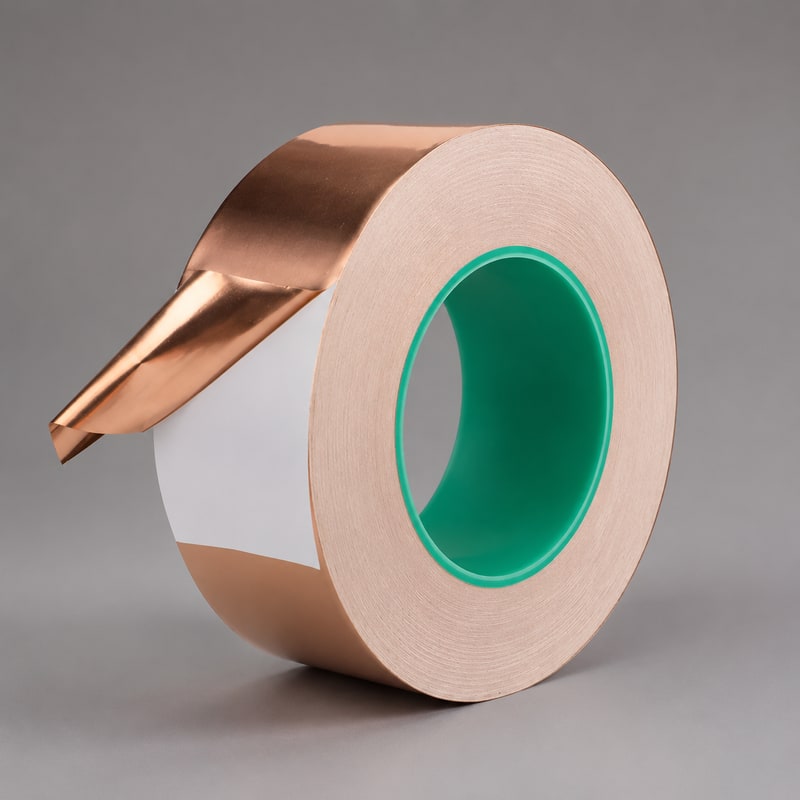
EMI shielding tape is selected by the electrical path and the mechanical joint it must create. Carrier material, adhesive conductivity, overlap design, grounding method, and conformability all affect shielding performance.
Define the shielding task
Decide whether the tape closes an enclosure seam, wraps a cable, bonds conductive foam, grounds a component, or repairs a shield. Define the frequency range, required continuity, available contact area, and expected movement before choosing a construction.
Compare copper and aluminum foil
Copper foil is highly conformable and can support grounding, soldering, and flexible wrapping. Aluminum foil is lightweight and useful where thermal conductivity, moisture sealing, or broad electromagnetic shielding is important. The adhesive may be single-conductive or double-conductive, so confirm which surface must carry current.
Consider conductive fabric
Conductive fabric tape is soft, flexible, and easy to conform around irregular shapes. It is useful for cable assemblies, displays, conductive foam, and sensitive electronic housings where a foil edge could be too stiff. Confirm abrasion resistance and the required soldering method.
Design the overlap and ground path
A shield is only as reliable as its weakest seam. Specify overlap width, pressure, edge cleanliness, grounding points, and continuity across corners. Avoid relying on adhesive conductivity where the design actually requires a mechanical or soldered ground.
Validate electrically and mechanically
Measure resistance across the joint after application and after flexing, humidity, heat, and aging. Inspect lifting, wrinkling, corrosion, and residue. WK Tape can help qualify foil or fabric constructions and convert them into repeatable shapes.